How to Write a Eulogy: Steps, Length and Examples
Most people write a eulogy in the worst week of their lives, with a few days' notice and no practice. The good news is that a eulogy doesn't need to be clever or complete. It needs to be true, it needs to sound like you, and it needs to fit in a few minutes. Here's how to get there in an evening.
First: what a eulogy is (and isn't)
A eulogy is a short speech, given at a funeral, memorial service or celebration of life, that helps everyone in the room remember the same person at once. It isn't an obituary — nobody needs the full list of jobs, dates and survivors read aloud — and it isn't a biography. You're not covering a whole life. You're choosing a few true things and telling them well.
Real example · written by Fablely
From three notes to “Nobody Gets Left at the Curb”
What was typed in
- Mom was a school-bus driver in Asheville for 27 years and knew every kid on her route by name. She raised my brother and me on her own after Dad left in 1994, and she still found time to coach the church softball team.
- Every first day of school she wore a ridiculous hat so the scared kindergartners would laugh instead of cry. She kept a box of granola bars under her seat for kids who skipped breakfast.
- She always said 'nobody gets left at the curb.' What I'll miss most is her calling every Sunday at 7 just to ask what I ate.
Type: Eulogy · Tone: Warm · About: Carol Bennett, my mom
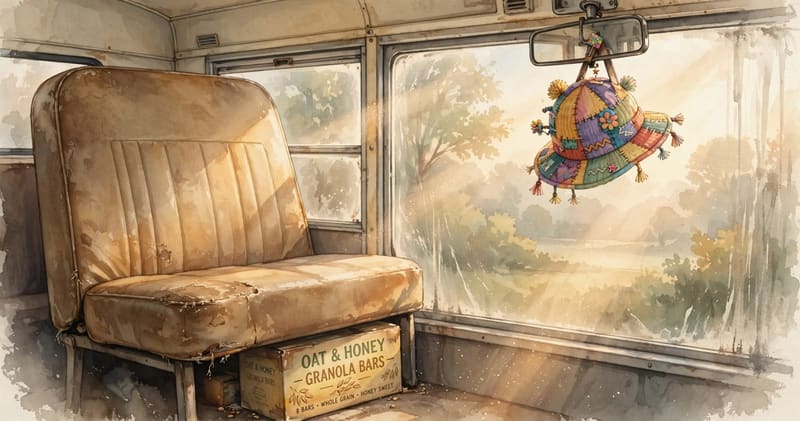 Eulogy · example
Nobody Gets Left at the Curb
Remembering Carol Bennett, who always circled back
I'm Carol's child. For twenty-seven years she drove a school bus through Asheville, and for every one of my years before that and since, she drove the rest of us too, whether we wanted steering or not. So I hope you'll let me take a few minutes to tell you about her, because…
Read the whole eulogy (650 words, about 5 minutes aloud) →
The family is made up for the example; Fablely wrote the eulogy from the notes above. More real examples: Feed People First (life story) · Mail from Home (biography) · Measure Twice (tribute) · Gerald the Moose, and the Dark That Didn't Scare Us (memory) · The Crooked Ladder (letter).
How long should a eulogy be?
Plan for three to five minutes unless you're told otherwise. Most people read at about 130–150 words a minute at a podium, a little slower than they talk, because they're nervous and because pauses are needed.
| Time at the podium | About this many words | When it fits |
|---|---|---|
| 2 minutes | 300 | Several speakers, or a short service |
| 3 minutes | 450 | The most common ask |
| 5 minutes | 750 | You're the main or only speaker |
Ask the officiant or funeral director how long you have. Shorter is almost never a problem; running long is.
Step 1: Gather memories before you write a word
Give yourself twenty minutes with a notebook — or a group text with your siblings — and collect raw material. Don't write sentences yet. Write fragments:
- Something they always said.
- A habit everyone teased them about.
- A place that was theirs: a kitchen, a workbench, a seat at the ballpark.
- A food, a smell, a song.
- How they showed love, especially if it wasn't in words.
- A story the family retells at every holiday.
- One afternoon with them you think about more than you'd expect.
Ask the people closest to you for one memory each. You'll get details you'd forgotten, and the eulogy will carry more than your view alone.
Step 2: Pick one thread
Look at your list and find what keeps coming back. Maybe it's that she fed everyone who walked through the door. Maybe he could fix anything and never said "I love you" — he just showed up with a toolbox. That thread is your eulogy. Everything else is optional.
Trying to cover every chapter of a life is the most common reason eulogies run long and feel flat.
Step 3: Write the opening
Start by saying who you are to them, then one line about who they were. That's it — the room relaxes once they know who's speaking. For example:
"For those of you I haven't met, I'm Maria, Rosa's oldest granddaughter. If you ever ate at her table, you already know most of what I'm going to say."
"I'm Daniel, Walter's son. Dad would have hated all this attention, so I'll try to keep it short — which, for anyone who ever asked him for directions, will be a first for this family."
Gentle humor in the opening is fine if it was part of who they were. It tells the room it's okay to smile.
Step 4: Tell one or two stories instead of listing qualities
"She was kind, generous and hard-working" washes over a room. A story lands. Compare:
- A list: "Dad was patient and loved the outdoors."
- A story: "Every Saturday before dawn, Dad took me fishing on Lake Superior. He'd quietly hook the fish himself, then hand me the rod so I could reel it in and think I'd caught it. I was thirty before I figured that out."
Choose the story that shows your thread. One great story told slowly is better than four told quickly.
Step 5: Say what they leave behind
Turn from them to the room for a moment. What do the people here carry now — a saying, a recipe, a way of treating strangers? This is where a eulogy becomes comforting rather than only sad.
"Half the people in this room know how to fold a tamale tight enough to survive the steamer, because she wouldn't let you leave her kitchen until you did."
Step 6: Close with a goodbye
End by speaking to them directly, in one or two sentences. Don't summarize the speech.
"Mom, nobody got left at the curb on your route, and none of us will be either. Thank you. We love you."
"Grandpa — measure twice, cut once. We'll try. Rest easy."
Step 7: Read it aloud, cut, and time it
Read the whole thing aloud with a timer. Cut anything you stumble over, anything that's an inside joke only two people will get, and anything that sounds like a résumé. Then read it aloud again, ideally to one person who knew them. Most first drafts lose a third of their length here and get better for it.
A simple eulogy outline you can fill in
- Opening: "I'm ___, ___'s ___ ." + one line about who they were.
- Who they were: two or three things everyone here will recognize.
- Story: one specific moment, told with the details: where, when, what was said.
- What they leave behind: what the people in this room carry now.
- Goodbye: one or two sentences spoken to them.
If you'd rather start from a draft, Fablely's AI eulogy writer follows this same shape: you add the memories, it writes a first draft you can read aloud, with the reading time shown, and you change whatever doesn't sound like you.
Writing a eulogy for your mom, dad or grandparent
For a mom. The everyday things usually are the eulogy: the phrases she repeated, the food, the way she seemed to know when something was wrong before you said a word. Pick one ordinary scene — a kitchen on a Sunday, the drive to school — and tell it well.
For a dad. Many dads showed love sideways: by fixing, building, driving, teaching. A small story about one of those moments says what he might never have said out loud. It's fine to name that, gently.
For a grandparent. Grandchildren often remember the house, the traditions, and the stories told to them as kids. Those are exactly right — and if you can, end with what they passed down to the generations in the room.
Delivering it
- Print it in a large font. Phones dim, scroll and buzz. Bring two copies.
- Mark where to breathe. A slash in the margin at the end of each paragraph reminds you to pause.
- Slow down. Nervous speakers rush; the room can't take it in. A good rule is to read slower than feels natural.
- It's okay to stop. If your voice breaks, take a breath and a sip of water. Nobody minds. The silence feels much longer to you than to them.
- Have a backup reader. Hand a copy to someone who can finish it if you need them to.
Common mistakes
- Running long. Five minutes is generous. Ten is a burden on the speakers after you.
- Reading a résumé. Jobs and dates belong in the obituary.
- Inside jokes. If the whole room won't get it, cut it or explain it in one line.
- Apologizing for emotion. You don't need to. Everyone there understands.
- Trying to say everything. Pick the thread; trust it.
If you're stuck
Start with the one memory you keep coming back to and write it down exactly as you'd tell it to a friend. That paragraph is the middle of your eulogy; the opening and the goodbye are two sentences each. Or tell Fablely's eulogy writer what you remember and edit the draft it gives you — the opening is free to read.
Frequently asked questions
How long should a eulogy be?
Three to five minutes is typical — roughly 450 to 750 words at a normal speaking pace. If several people are speaking, two to three minutes (about 300 to 450 words) is common. Ask the officiant how much time you have.
How do you start a eulogy?
Say who you are to the person, then one line about who they were — for example, "I'm Maria, Rosa's oldest granddaughter. If you ever ate at her table, you already know most of what I'm going to say." It lets the room know who's speaking and sets the tone.
How do you end a eulogy?
With a short goodbye spoken directly to them, in one or two sentences — not a summary of what you just said. Many people use a phrase the person often said, or simply "Thank you. We love you."
Is it okay to use humor in a eulogy?
Yes, if humor was part of who they were and it's gentle. A funny story the whole family knows can be a relief for the room. Avoid jokes at anyone's expense and inside jokes only a few people will understand.
Can I use an AI to help write a eulogy?
Yes, as long as the memories and the final words are yours. An AI eulogy writer can turn your notes into a first draft with a clear shape; read it aloud, change what doesn't sound like you, and add the details only you know.
Get a first draft of the eulogy — free.
Share a few memories and Fablely writes a eulogy you can stand up and read — usually three to five minutes aloud — in about 30 seconds. Read the opening free; keep the whole eulogy for $9, with a print-ready PDF.
Write the eulogy free →